How is the donation sector developing in the cryptocurrency industry?

How is the donation sector developing in the cryptocurrency industry? Cryptocurrencies have long ceased to be mere speculative assets; increasingly, they are becoming a means to make the world a better place.
Who was the first to make donations in cryptocurrency?
One of the earliest high-profile examples was the Pineapple Fund, created by an anonymous donor known as Pine, who donated significant amounts of Bitcoin to more than 60 charitable organizations in 2017–2018. The initial idea was simple: leverage the rapid increase in Bitcoin’s price to support small funds and initiatives in need of resources for doing good.
The emergence of the first aggregators
Over time, platforms aggregating cryptocurrency-based donations began to appear, allowing users to quickly select projects, review their goals and fundraising amounts, and contribute digital currency for charitable needs. One of the first major aggregator projects is considered to be the BitGive Foundation (founded in 2013). They emphasized transparency and open reporting to show exactly how donations were being used.
How did it work in practice?
- 🔹 Aggregators and individual projects provided a dedicated “Donate in Crypto” button on their websites.
- 🔹 All transactions were recorded on the blockchain, enabling anyone to trace where the funds went.
- 🔹 Organizations periodically published reports in an “on-chain audit” format or shared transaction hashes to confirm that donations were spent appropriately.
How did the idea of this donation method arise?
- 🔸 The surge in Bitcoin’s popularity and other cryptocurrencies, combined with increasing concerns over transparency in traditional charitable foundations.
- 🔸 Blockchain made it possible to record each transaction “visibly and permanently,” leading people to trust these tools.
- 🔸 Many younger donors wanted to support projects quickly and without intermediaries, as cryptocurrencies can be transferred to any part of the world with ease.
What is the current state of cryptocurrency donations?
- ▫️ Today, numerous major funds and platforms accept crypto donations, including The Giving Block, Binance Charity, Save the Children, and others.
- ▫️ Over the past 5–7 years, many aggregators and charitable crypto projects have emerged—and continue to expand.
- ▫️ In 2022–2023, the total volume of crypto donations for various initiatives (humanitarian aid, medical research, environmental causes) reached tens, and in some cases even hundreds, of millions of dollars.
How will the donation sector continue to develop?
- 🔹 Greater transparency: New protocols and tools will enhance reporting standards.
- 🔹 Convenience and speed: More services will emerge, allowing donations not only in Bitcoin or Ether but also with tokens on various blockchains, including stablecoins.
- 🔹 Integration with DeFi and SocialFi: Hybrid models may appear, enabling donors to receive rewards or NFTs for supporting projects, reinforcing the “social investment” effect.
How does GrantiX differ from others?
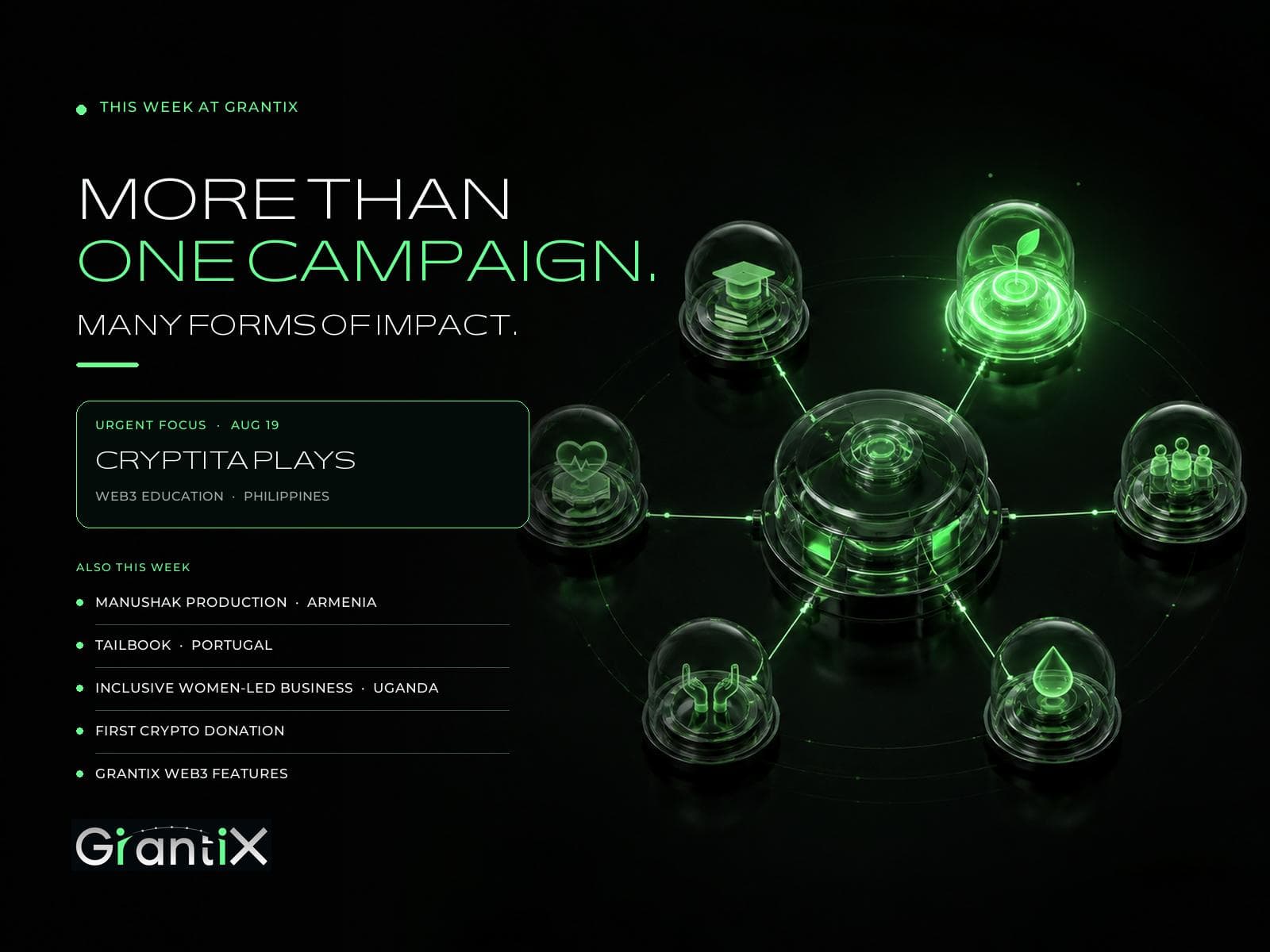
- ✅ Global blockchain ecosystem: GrantiX goes beyond just fundraising—it’s a complete platform for developing social enterprises and charitable initiatives.
- ✅ Transparency and innovation: Transactions and reports on the blockchain plus a dedicated GrantiX token provide additional growth opportunities for projects and their communities.
- ✅ Knowledge academy: The GrantiX ecosystem offers educational and analytical tools, helping new projects grow and attract more donors.
- ✅ Focus on social entrepreneurship: GrantiX is not just a charitable aggregator; it’s a platform where you can not only accept donations but also sell products, collaborate with major media outlets, and find global partners.
Cryptocurrency-powered donations aren’t just a passing trend—they’re transforming the future of giving. With GrantiX, this transformation becomes even more powerful, helping innovators and philanthropists team up to reshape the world in meaningful ways.