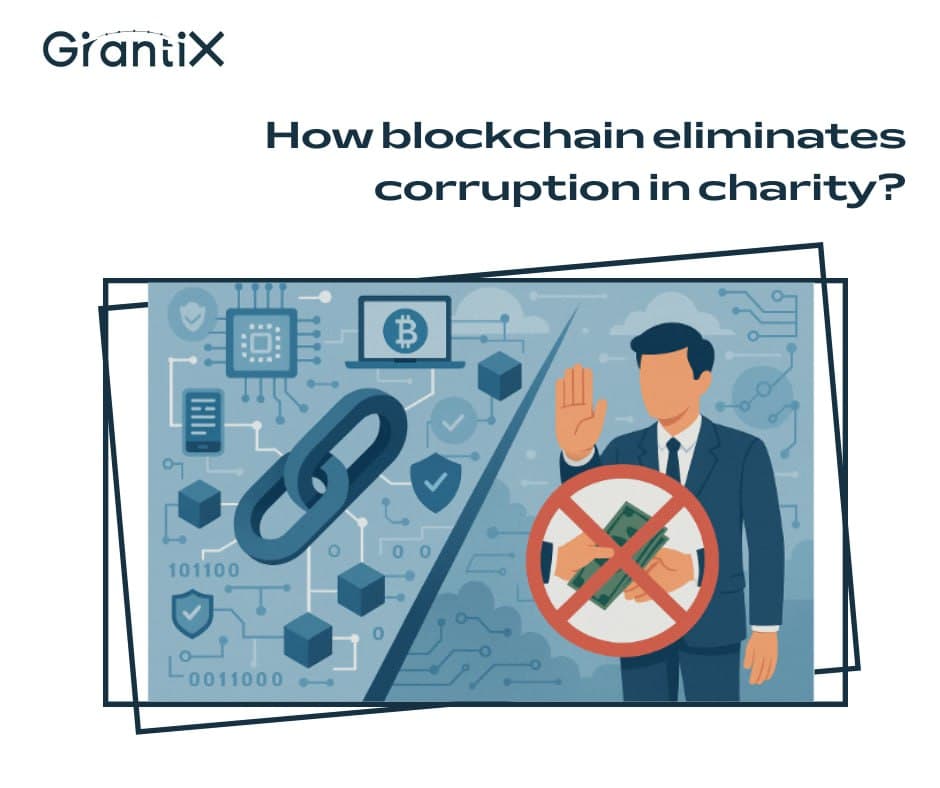
How blockchain eliminates corruption in charity?
GrantiX NewsMay 14, 2025
Traditional NGOs (non-governmental organizations) working in social assistance, charity, environmental protection, and other important social issues often face problems such as opacity in fund allocation, high fees, and delays in payments. This complicates the effective use of resources and reduces trust from donors and supporting organizations.
💡 Problems of traditional NGOs and how GrantiX solves them with blockchain
- 🔹 Opacity:
In traditional NGOs, it’s difficult to track where funds go and how they are used, creating space for corruption. GrantiX solves this problem by using a public blockchain, where every transaction is accessible to all participants. This ensures full transparency in the use of funds. - 🔹 High fees:
Most traditional funds charge fees for payment processing, reducing the amount allocated to charitable projects. In GrantiX, fees are minimal due to the use of blockchain and smart contracts, significantly reducing costs for intermediaries. - 🔹 Delays in payments:
Traditional funds often face delays in transferring funds, slowing down aid to those in need. With smart contracts, GrantiX automates all transactions, ensuring instant and accurate payments without third-party involvement. - 🔹 Lack of community participation:
In traditional funds, donors don’t always have the ability to directly influence the choice of projects they wish to support. GrantiX uses decentralized voting, where participants can vote for the projects supported by the fund. This makes the processes more democratic and involves the community in decision-making.
📌 Do you trust traditional funds? Or is blockchain the future of charity?
💬 Share your thoughts in the comments!
📢 Join GrantiX (https://grantix.com/) and learn how technology can change the world of charity!